|
Maximum Heart Rate and Target Heart Zone
Your maximum heart rate is estimated to be 220 beats per minute (bpm) minus your age. When exercising, your target heart rate zone is 50-85 percent of your maximum heart rate. The American Heart Association recommends:
"When starting an exercise program, aim at the lowest part of your target zone (50 percent) during the first few weeks. Gradually build up to the higher part of your target zone (75 percent). After six months or more of regular exercise, you may be able to exercise comfortably at up to 85 percent of your maximum heart rate. However, you don't have to exercise that hard to stay in shape."
Choose Heart Rate in the HeartZone app to determine your heart rate and % max (percent of your maximum heart rate).
In HeartZone your target heart zone is shown by color.
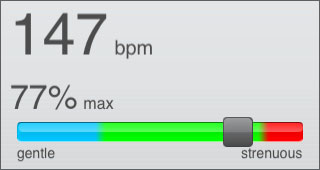
60 percent intensity or less is colored blue indicating gentle exercise. 50 to 60 percent is the safest, most comfortable zone, known as the Healthy Heart Zone. Walkers are often in this zone.
60 to 80 percent is colored green indicating moderate exercise. This includes both the Fitness Zone and the Aerobic Zone.
60 to 70 percent is the Fitness Zone or Fat Burning Zone as 85 percent of the total calories burned in this zone are fat calories (although calories are burned more quickly in higher heart rate zones).
70 to 80 percent max is the Aerobic Zone, which helps with endurance training and is believed to give the best fitness training benefits.
80 percent max or higher is colored red indicating strenuous exercise. 80 to 90 percent is the Anaerobic Zone, where your working muscles build up lactic acid faster than the body can remove.
Training at or above 90 percent is not recommended as there is increased potential for injury. If you wish to exercise above 90 percent max even for short bursts, you should first consult with a doctor.
See the heart rate zones article for more detailed information.
Heart Rate Recovery
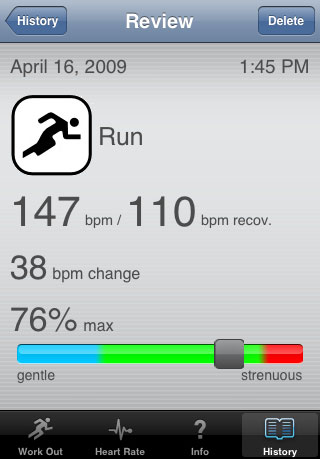
HeartZone's built in Work Out mode calculates your heart rate drop after exercise, which is a sign of your fitness level.
Your heart rate rises when you exercise. When you stop your heart rate drops, taking about one hour to return to pre-exercise rates. The higher your fitness level the quicker your heart rate drops.
To find your recovery rate:
- Exercise at the top of your personal level for 10 minutes or more.
- Stop exercising and immediately measure your heart rate.
- One minute later measure your heart rate again.
- The amount your heart rate dropped is your recovery rate.
A standard recovery heart rate is 20 to 30 beats per minute (bpm) less than your heart rate during intense exercise.
If your heart rate slows more than 50 bpm compared to peak heart rate during exercise, it is a sign of excellent fitness.
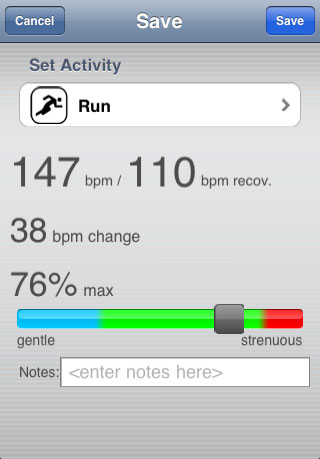
Choose Work Out in the HeartZone app to measure and save your heart rate recovery. You can then watch how your recovery rate changes over time to see if your fitness level is improving.
Learn more heart rate techniques
Target Heart Rates by AmericanHeart.org
What's a Normal Heart Rate by Mayo Clinic
Determine your resting heart rate by About.com
Heart Rate Zones by About.com
|